Workshops · half-day to multi-day
AI agent training
Your teams learn to hand their own work to agents in hands-on workshops, remote or on site, in English or German.
Find your team's trainingWe can't find the internet
Attempting to reconnect
Something went wrong!
Hang in there while we get back on track
I train your teams to hand real work to AI agents, show you where agents add output, and build the systems they run on.
From an engineer who studied people, so your teams keep using the agents after the workshop ends.
Diagram: the same three people pass their work through AI agents, put to work through training, consulting and development, and twice as much comes out the other side.






Most of the week still goes on work an agent could take over, and hiring looks like the only way to do more. Agents change that once people know what to hand over.
Pick one or combine them. Each gets more done with the people you already have.
Workshops · half-day to multi-day
Your teams learn to hand their own work to agents in hands-on workshops, remote or on site, in English or German.
Find your team's trainingAdvisory · assessment → roadmap
I look at how your work gets done and show where agents add output. For any department.
Project delivery · idea → production
Agents that take repeat work off your team, built into your stack and data, from first prototype to production.
What automation did at The Happy Beavers, the marketing agency where I was co-founder and CTO for six years.
Dot diagram: a core team of 11 surrounded by more than 150 freelancers.
From engineering teams I trained to work with AI agents.
I worked closely with Luka as the topic sponsor for a workshop on integrating AI meaningfully into everyday development work.
He took the time to understand our participants' needs and adapted his approach to the tools and working environments available.
Participant feedback reinforced my own positive experience, with especially strong recognition of his subject expertise and the balance between theory and practice.
I wholeheartedly recommend Luka as a trainer to any team looking to build practical AI skills.

We had a Cursor AI training with Luka. He is a highly competent trainer who answered all our questions thoroughly and adapted the course to our needs and preferences. I highly recommend working with him!

Four steps from your first message to more output from the same team.
01
A few lines are enough: what the team does, which tools it uses and where the time goes.
02
On a call we look at your situation together, and I tell you where I would start.
03
It sets out the scope, the format and the price in writing before anything is booked.
04
Your people pass repeat work to agents, and we check the result against the numbers you started with.
About me
I'm Luka Breitig. I train teams to work with AI agents, show companies where agents add output, and build agent systems in Elixir/Phoenix and Python.

6 years as co-founder and CTO
Three production systems live
BSc in Psychology
Top 2% nationally in a master's in management
Agents only scale your work when people use them. So I start with the people doing the work, and build from there.
I read and answer every message myself, usually within a day.
Software I designed, built and run myself, live with real users.
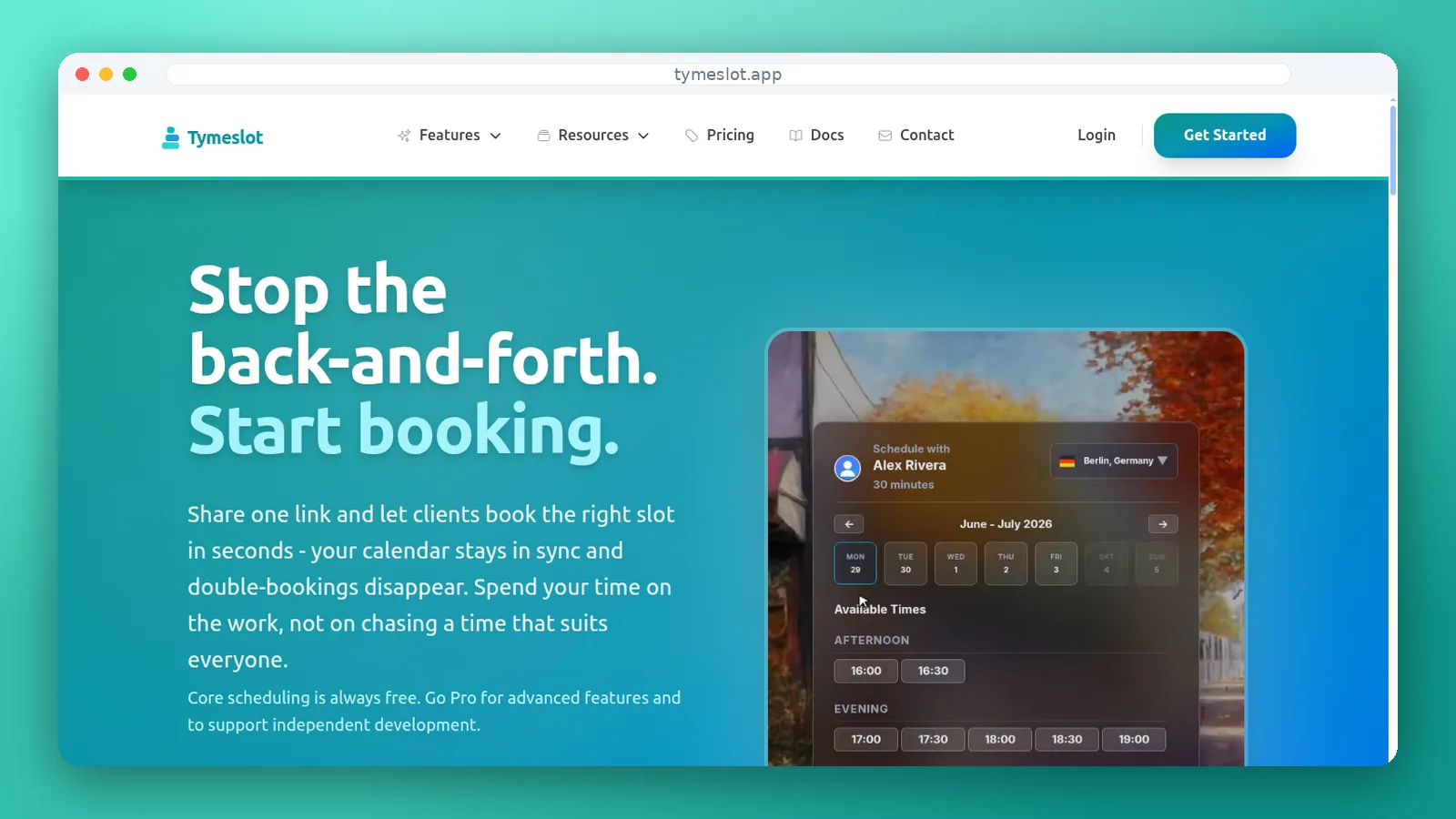
Designed and built in Elixir: keeps bookings consistent across Google, Microsoft and CalDAV calendars.
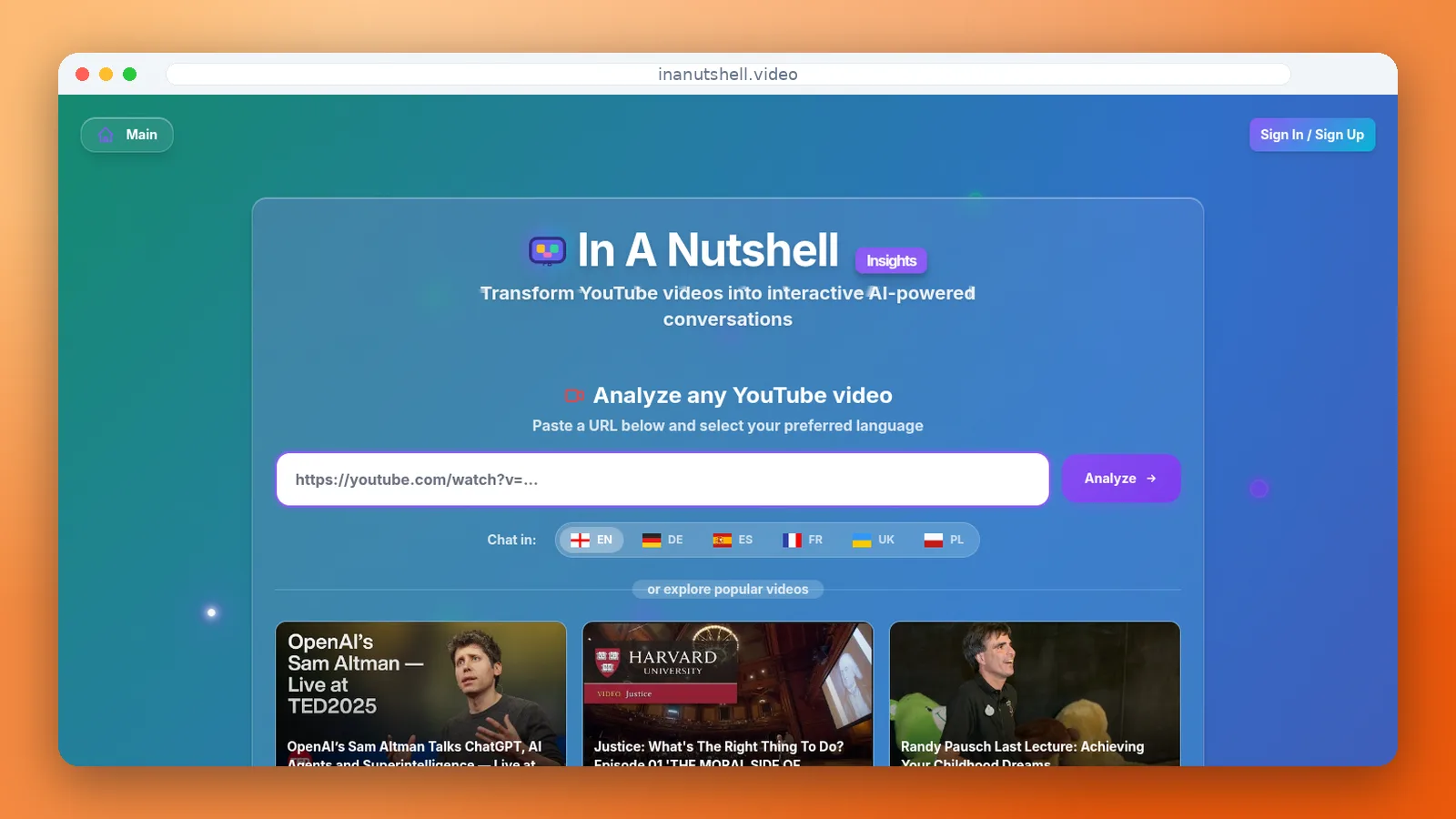
Ask questions about long YouTube videos and get answers with timestamps.
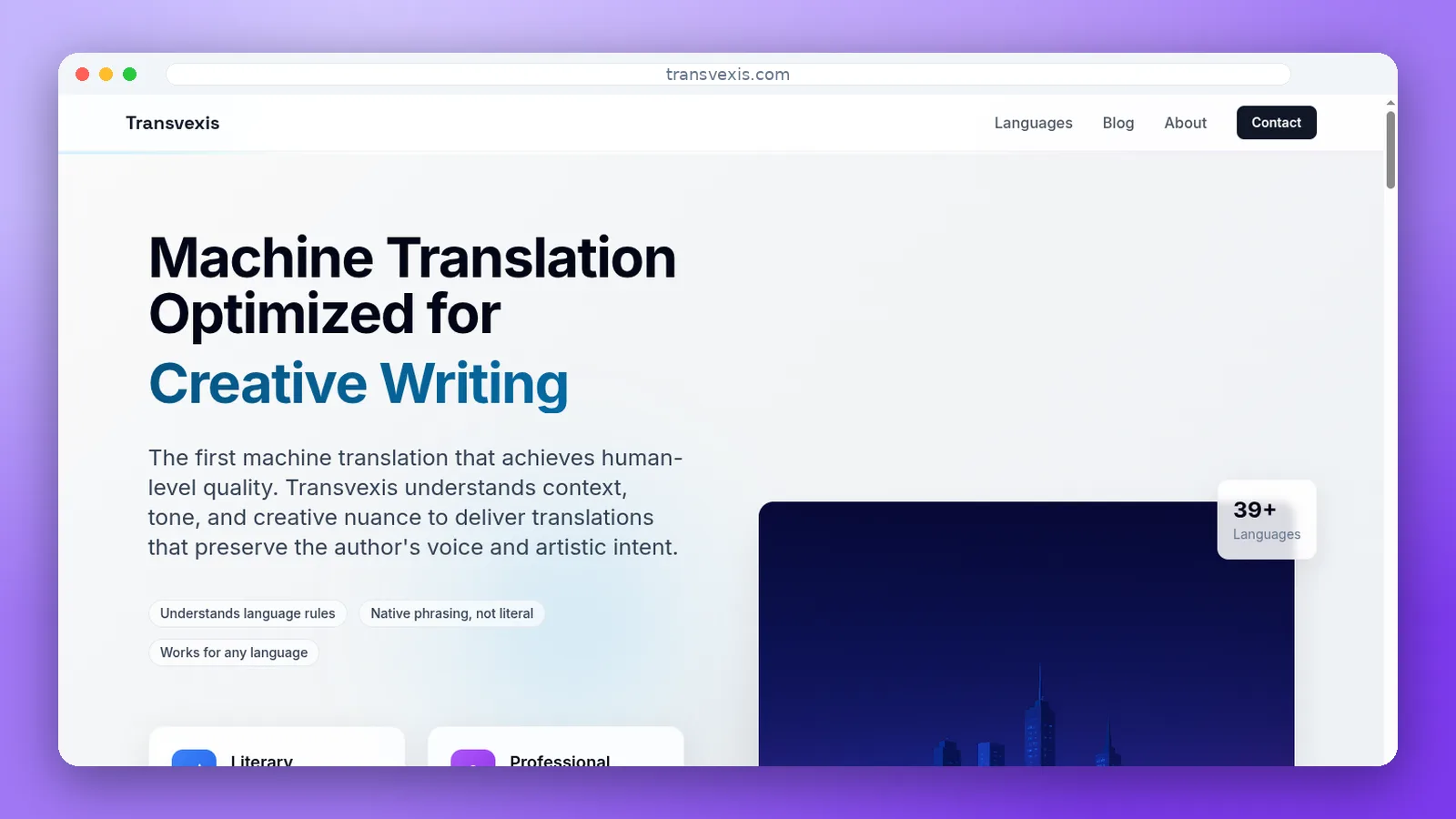
Translation that keeps voice and style across 39+ languages.
How engagements run, what they cost, and how training, consulting and development fit together.
An engagement runs in three phases. First I sit with your team and watch the real work: which tasks eat the time, which tools people already use, and where they get stuck. Then I map where agents add output and what to build, buy or leave alone. Finally you get a rollout plan your people will follow, including how we will measure the result, with training or development from me if you want help carrying it out. After a first call about your situation you get a written quote for the assessment before any work starts; anything after the roadmap is quoted separately.
Agents get rolled out without being set up for the team's work, nobody says which tasks to hand over, prompts and playbooks stay personal, and support ends after the first workshop. People also have to trust the output before they change how they work, and that is a question of behaviour. I studied psychology before I became an engineer, so I work on both layers, the people and the software, and find the bottleneck before I suggest a fix.
We agree on baseline metrics before we start. For engineering teams that is typically PR cycle time, time to first commit on new tasks and the share of work done with agents; for marketing teams, time from brief to published piece and output per person. Team satisfaction counts for both. Once the new workflows are in place, we measure again. The goal is a change in those numbers you can show your CFO. If the numbers do not move, we have a problem to solve together.
That is the point. Consulting leaves you with a written roadmap: a map of where the hours go, a ranked shortlist of tasks to hand to agents, what to build, buy or leave alone, a people rollout plan and a baseline to measure against. If you need them, I also write the playbooks and train an internal champion. Where agents are set up during training or development, your team keeps those configurations too (instruction files such as CLAUDE.md, agent settings, prompt libraries). Success means your team keeps producing more after I have gone. Top-up training and further advice are there when something new comes up, and you book them only if you need them.
Training builds skills: half-day to multi-day workshops in which your engineering, marketing or leadership team learns to hand real work to AI agents. It fits when the gap is mainly knowledge. Consulting answers a different question: where in your company agents should do the work, and how to roll them out so that people use them. Often it takes both, a plan first and then training for the teams who will carry it out.
Off-the-shelf tools are good at general tasks. A custom agent system matters when it has to work inside your stack, use your own data or follow complex business rules. An agent system can run multi-step workflows, for example syncing CRM data, checking inventory or routing approvals, that a chatbot or a simple API wrapper cannot handle. The decision usually comes down to whether the workflow is your competitive edge or a productivity aid.
It depends on what you need: the service, the size of the team, how long it runs and how much preparation it takes. Tell me about your situation and we'll work out an offer that makes sense for both sides.
Send me a few lines about your team and what's in the way. I reply myself, usually within a day, and if it sounds like a fit we talk it through on a call.
Have a question about your team and AI agents?
A few lines are enough. I'll write back with how I'd approach it, and we'll see from there.

Step by step, how an AI agent plans a task, uses tools and checks its own work, and how to tell which of your team's tasks it can take on.
Claude now watermarks everything it writes. I read Anthropic's write-up, the EU law behind it and the research to find out who can detect the mark and what removes it.