I understand the problem.
Then I build the solution.
One person who handles requirements, designs the architecture, and writes the production code. Psychology and management background meets hands-on engineering.
Why this is hard
Building the right thing is harder than building a thing.
Agencies don't own the outcome
You explain your vision, they write a spec, then a rotating cast of developers builds something that technically matches the brief but misses the point. You spend more time managing the agency than they spend understanding your problem.
Freelancers need constant direction
A skilled coder can build what you describe — but someone still needs to figure out what to describe. Without a bridge between business logic and technical decisions, you end up with code that works but doesn't solve the right problem.
Consultants talk, nobody builds
You've sat through the strategy decks and vendor demos. What you need is someone who can cut through the noise, tell you what's realistic, and then actually build it. Not another middleman — someone who ships.
What I build
Complete systems, from business problem to production deployment.
AI-powered systems
Production AI that goes beyond demos. I integrate LLMs, vector search, and custom pipelines into systems that handle real-world edge cases and scale under load.
- LLM integration (OpenAI, Anthropic, custom models)
- RAG systems with vector search (Qdrant, pgvector)
- Multi-stage processing pipelines with quality controls
- Semantic search across your company's knowledge base
Real-time applications
Highly interactive applications built with Elixir and Phoenix LiveView. No JavaScript framework complexity — just fast, reliable, real-time experiences.
- Phoenix LiveView for instant UI updates without JS frameworks
- Concurrent systems using Elixir OTP supervision trees
- Fault-tolerant architecture that handles failures gracefully
- WebSocket-powered collaboration and live dashboards
Workflow automation
Six years as Co-Founder & CTO of the marketing agency The Happy Beavers, 80% automation rate. I audit your operations, identify what's worth automating, and implement it — using n8n, Zapier, or custom code depending on complexity.
- Workflow analysis and automation roadmap
- n8n/Zapier implementation for quick wins
- Custom API integrations where off-the-shelf tools fall short
- Process documentation and team handoff
Need help with team adoption? I also help teams integrate AI tools into their workflows and run hands-on training.
How I work
One person, three phases. No handoffs, no lost context.
Understand
I start with your business problem, not a technical spec. My background in psychology and management means I understand organisational dynamics, user behaviour, and strategic constraints — not just code requirements.
Build
I design the architecture and write the production code. No gap between what was planned and what gets built — the person who understood the problem is the same person writing the solution.
Ship
Deployment, monitoring, documentation, and handoff. You get a production system that works, with the context to maintain it. I stick around until it's running and your team is comfortable.
Why me
Most developers write code. I understand why you need it built in the first place.
Strategic depth
Can he understand my business problem?
I studied how people think, how organisations function, and how to analyse complex systems before writing my first line of code. This helps me understand what users actually need — the unstated requirements that make or break adoption.
When you explain your business problem, I understand your metrics, how your teams work together, and how technology can enable strategic goals. I translate between boardroom and codebase.
Triple scholarship recipient — Stiftung der Deutschen Wirtschaft (SDW), top 2% nationally. Built the skill to dive deep into unfamiliar domains quickly — crucial when learning new technical systems or understanding client industries.
Production systems shipped
Can he actually build production systems?
I took operations from manual to 80% automated, led teams, and made architectural decisions that scaled with the business. I lived with the consequences of my technical choices for years — I know what breaks at scale.
Three production systems live: specialised translation engine (39+ languages), AI-powered video analysis platform, and open-source scheduling system. All serving real users, generating measurable results.
Shipped systems
Production systems serving real users — from concept through to deployment.
Tymeslot
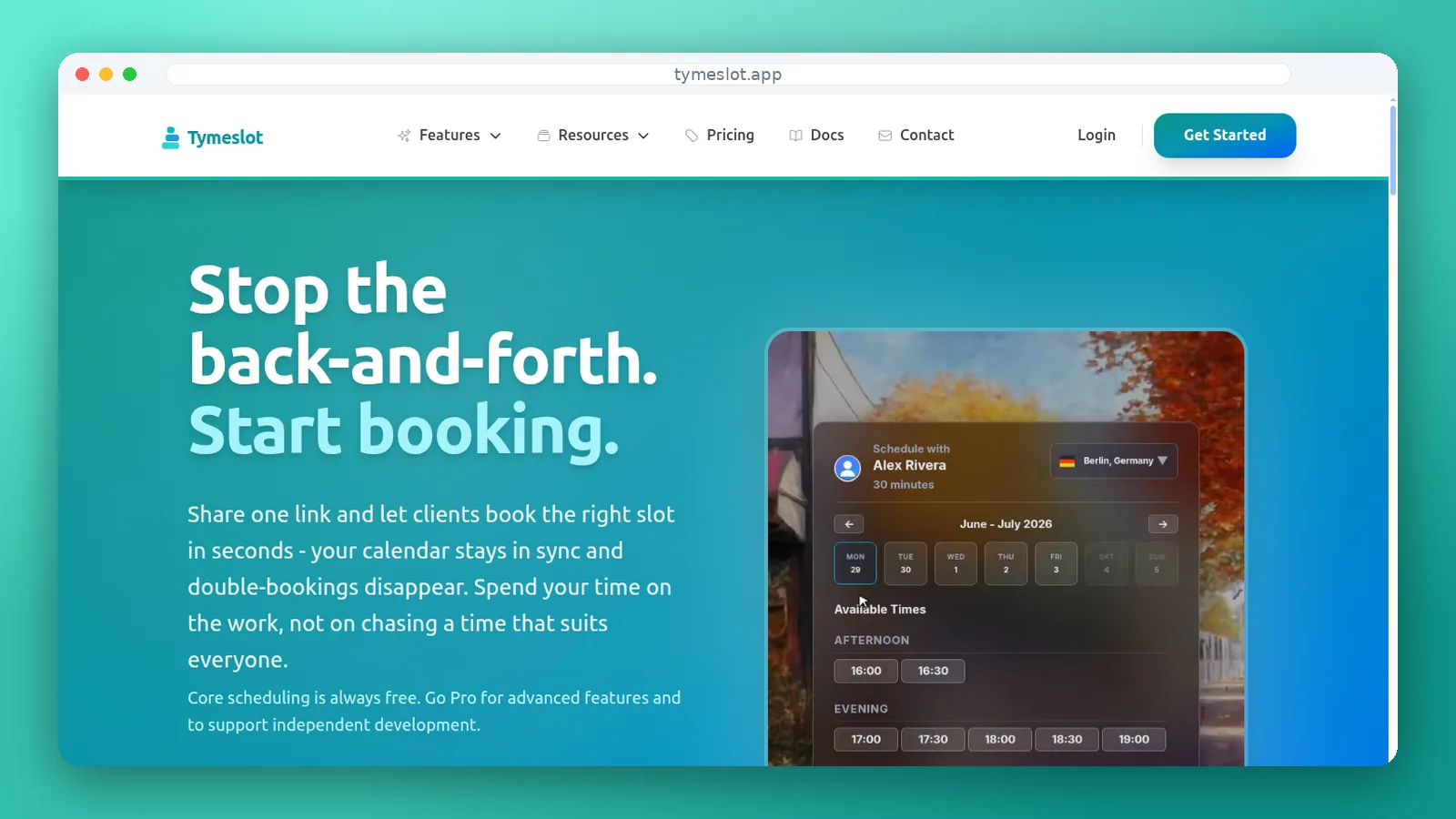
Open-source scheduling platform that businesses can self-host instead of paying recurring SaaS fees. The core challenge: ensuring zero double-bookings across different calendar providers (Google, Microsoft, CalDAV) while maintaining real-time updates. Built with Elixir and Phoenix LiveView to handle concurrent bookings with the reliability mission-critical scheduling demands.
- Zero race conditions: concurrent bookings handled safely using Elixir's OTP supervision trees
- Real-time synchronisation: booking state propagates instantly via Phoenix PubSub
- Fault-tolerant design: graceful degradation during third-party calendar outages
Transvexis
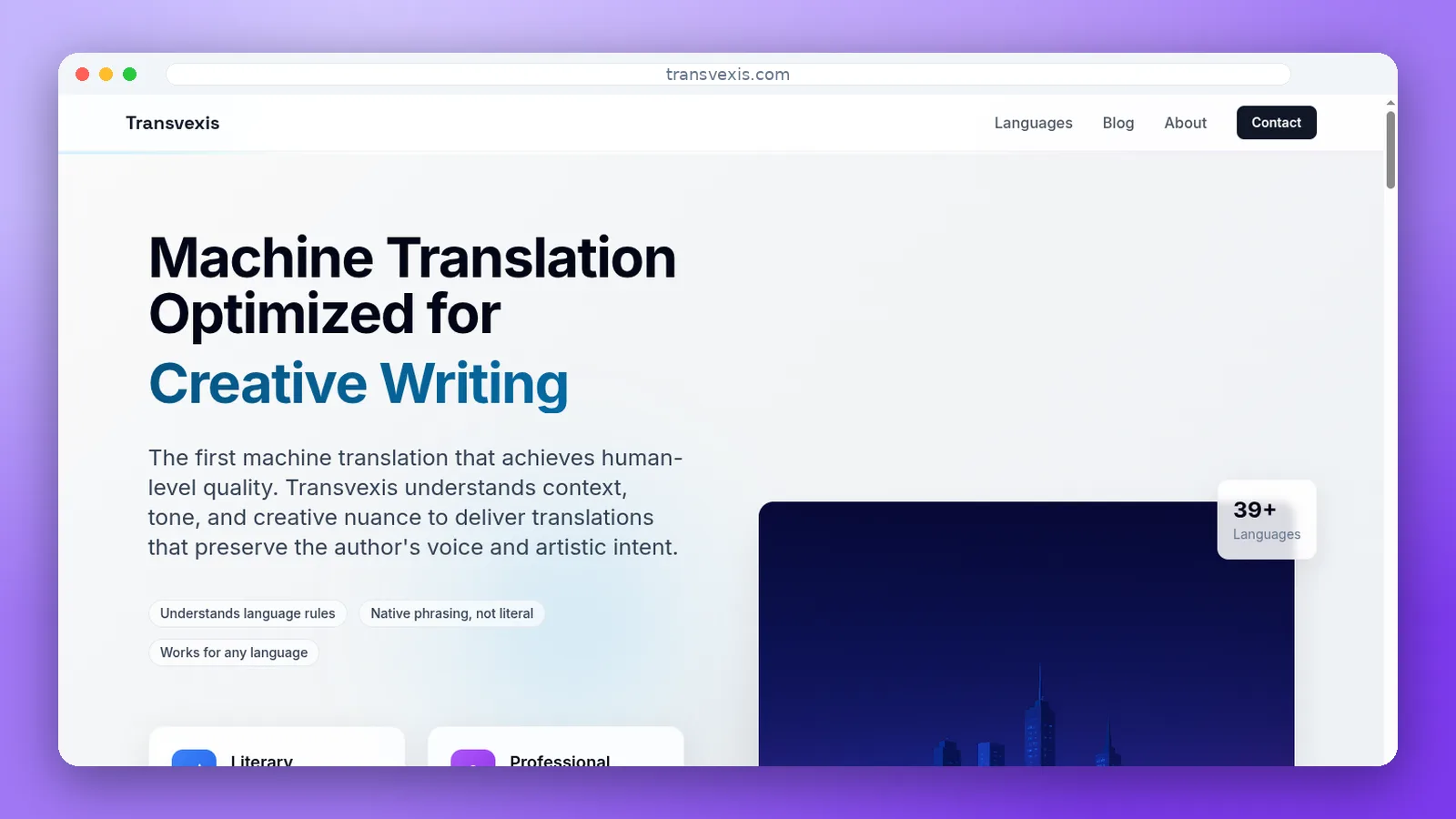
Specialised translation platform that preserves the author's voice and style across 39+ languages. Multi-stage LLM pipelines with iterative refinement and context injection maintain terminology consistency and cultural nuance. 40–60% reduction in post-editing time compared to DeepL for domain-specific content.
In A Nutshell
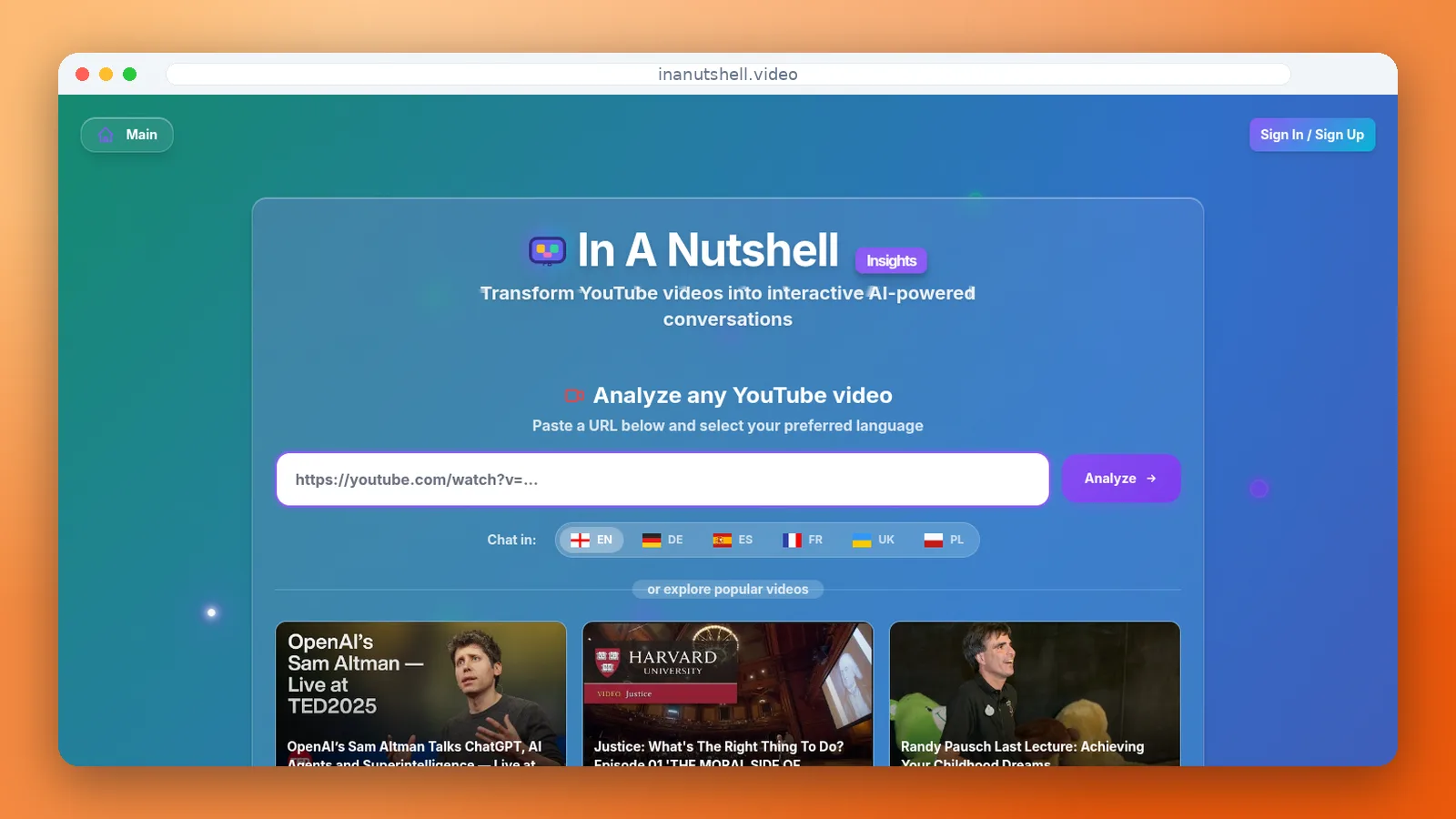
AI-powered semantic search for long-form YouTube videos. Intelligently segments videos into meaningful topics and builds a semantic index. Ask natural language questions, get answers with exact timestamp citations. Eliminates manual scrubbing through hours of content.
Further reading
Articles from the blog on the topics behind this service
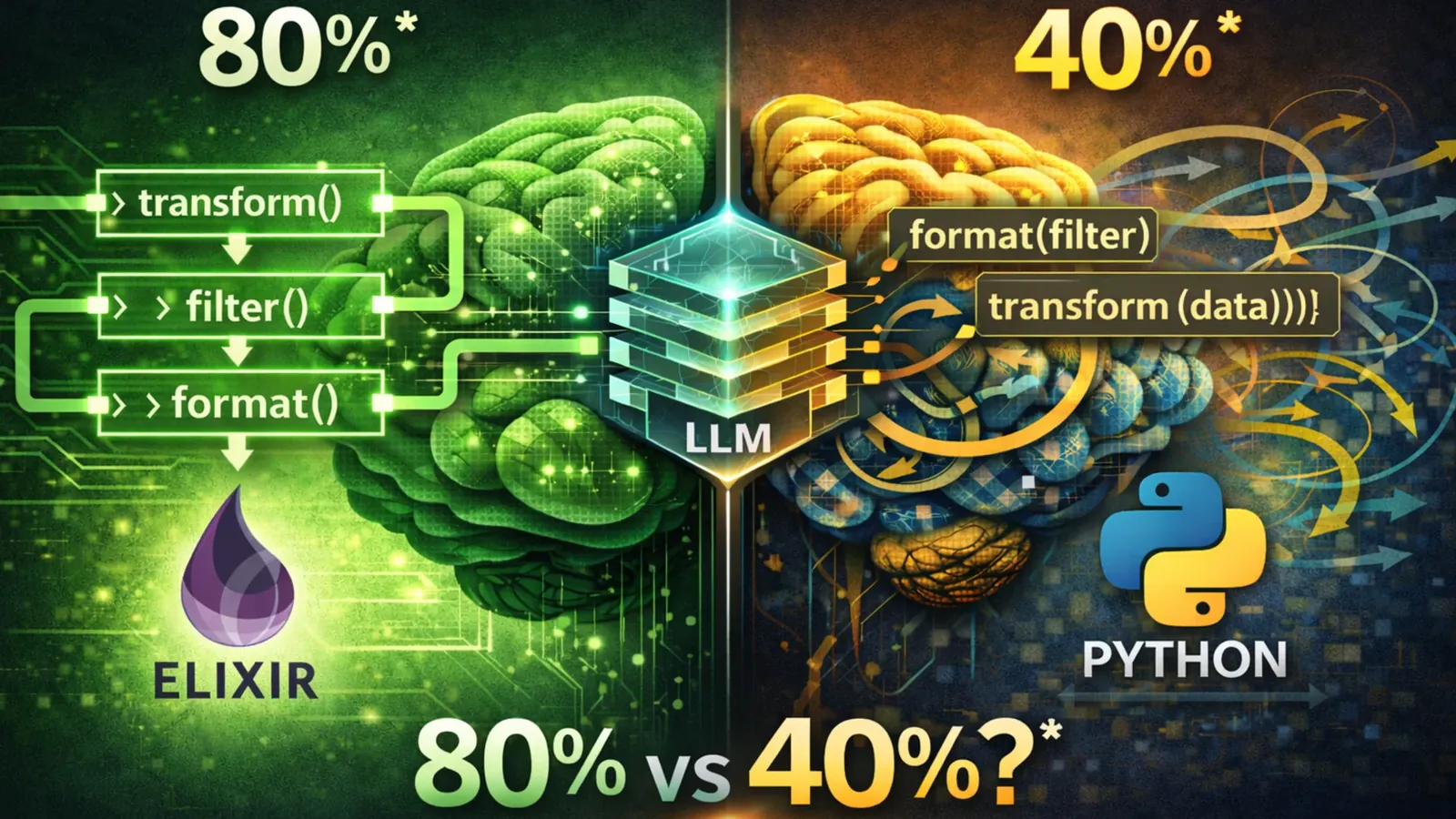
Do LLMs really write better Elixir than Python?
A Tencent benchmark ranked Elixir #1 for LLM code generation. As an Elixir developer, I dug into the data — the truth is more nuanced than the headline, but the structural advantages are real.

From chatbot to agent: a step-by-step mental model for understanding agentic AI
Moving from conversational mimicry to autonomous execution: understand how agentic AI systems pursue complex goals, use tools, and adapt to changing environments through a continuous reasoning loop.

When your AI turns against you: defending public chatbots from prompt injection
Users turned Bild.de's public chatbot against the brand. Here are the prompt-injection defences every team running a public-facing AI should put in place.
Frequently asked questions
Common questions about custom AI development and software projects
It depends on the project's complexity and your need for strategic understanding. Agencies offer team capacity but often rotate developers, lose context, and require you to manage coordination. A senior freelance specialist gives you direct access to the decision-maker who understands both your business problem and the technical architecture. For AI projects specifically, the gap between business requirements and technical feasibility is where most projects fail — having one person who bridges both sides eliminates the costly translation errors that happen when strategy and engineering are separate teams.
A ChatGPT wrapper takes user input, sends it to an API, and displays the response — it adds minimal value beyond the raw model. A custom AI system integrates deeply with your tech stack, enforces business rules, processes proprietary data through multi-stage pipelines, and automates complex workflows end to end. For example, a custom system might automatically sync CRM data, run inventory checks, generate tailored proposals, and route them for approval — something no off-the-shelf chatbot can do. The difference is between a demo and a competitive advantage.
Yes. Phoenix LiveView lets you build highly interactive, real-time applications using server-rendered HTML over WebSockets — no JavaScript framework required. You get instant UI updates, live dashboards, collaborative features, and real-time search without maintaining a separate frontend codebase, API layer, or state management library. LiveView applications are also inherently simpler to deploy and maintain because the entire application logic lives in one place, built on Elixir's fault-tolerant runtime.
This combination is rare because most career paths specialise in one direction. Look for someone with both formal business education and hands-on engineering experience — not just a developer who reads business books, but someone who has held strategic roles. My background combines a psychology degree (understanding user behaviour), a Management MA as a Stiftung der Deutschen Wirtschaft (SDW) scholar (business strategy and economics), and six years as Co-Founder & CTO of the marketing agency The Happy Beavers, building and scaling production systems. This means I start every project by understanding the business problem, not by choosing a technology.
Have a question about your project?
Ready to build?
Tell me about your project — I'll give you an honest assessment of what it takes and whether I'm the right fit.
No commitment needed — just a conversation about what you're building.
Built for
Production systems I have designed and built for client engineering teams.
TikTok
Custom machine-translation solution
Freedom24
Custom machine-translation solution for financial content