
About
Luka Breitig is an AI Agent Trainer and Software Engineer: an engineer who studied people. He trains engineering and marketing teams to work with AI agents, so they get more done with the people they already have, and he builds the software when a team needs it built. He works in English and German, on site or remotely.
His background is unusual for an engineer. He holds a B.Sc. in Psychology and an M.A. in Management, and is a triple scholarship recipient, including the Stiftung der Deutschen Wirtschaft (SDW), placing in the top 2% nationally. That is why he treats AI adoption as a people problem as much as a software one: an agent only scales a team's work once people trust it and change how they work.
Before this, Luka spent six years as Co-Founder & CTO of the marketing agency The Happy Beavers, where he automated 80% of the business processes. Working next to marketers every day showed him where automation pays off and where human judgement still decides the result.
Today his work covers three equal areas:
- Training: engineering and marketing teams on AI agents, Claude Code, Cursor, Codex and MCP servers
- Implementation consulting: getting AI agents adopted in real workflows
- Development: agent systems and custom software in Elixir/Phoenix and Python
He delivers training commissioned by L&D providers including Cegos Integrata and NobleProg, has spoken at international conferences on AI integration, and designs custom programmes for teams bringing agents into their existing work.
His notable projects include:
- Tymeslot - self-hostable scheduling platform with real-time calendar sync, embeddable booking widgets and n8n integration
- Transvexis - multilingual translation platform serving clients in over 39 languages
- In A Nutshell - AI semantic search for video content with timestamp citations
Luka believes the best technical solution is the one a team actually uses. His writing covers practical patterns from training teams, building AI products and putting LLMs into real applications, all drawn from systems he has built and run himself.
Expertise
Experience
- Co-Founder & CTO at the marketing agency The Happy Beavers (2018 to 2024): 80% of business processes automated
- International conference speaker on AI integration and production patterns
- Trainer commissioned by L&D providers including Cegos Integrata and NobleProg
Education
-
Psychology BSc
University of Osnabrück · 2009–2012
-
Management MA
Zeppelin University, Friedrichshafen, Germany · 2012–2015
- Stiftung der Deutschen Wirtschaft (SDW) Scholar: triple recipient, top 2%
Speaking & training
-
Cegos Integrata
Commissioned trainer via a leading European L&D provider
-
NobleProg
AI coding workshops via one of the world's largest IT training marketplaces
-
Innomotics
In-house AI training for engineering teams
-
financial.com
In-house Cursor training for the engineering team
-
Digitality Agency
Training for the design team in using LLMs for coding work
-
Bots & People
Commissioned trainer for developer workshops
-
Code First Girls
Course creator: a 3-month curriculum on AI and agentic tools
-
Nomad Summit
Conference speaker on AI tools, agentic development and developer workflows (2025)
-
Vertiv
On-site workshops in AI-assisted coding for engineering teams
-
Deutsche Telekom
Hands-on AI coding training for enterprise engineering teams
Articles by Luka
Claude's text watermark: what it is, who can check for it, and whether it washes out
August 13, 2026
Anthropic quietly began watermarking everything Claude writes. I went through the announcement, Anthropic's technical write-up, the law that prompted it, and the research on whether a watermark like this can be detected or removed. Most of the advice going around is nonsense, but not all of it.
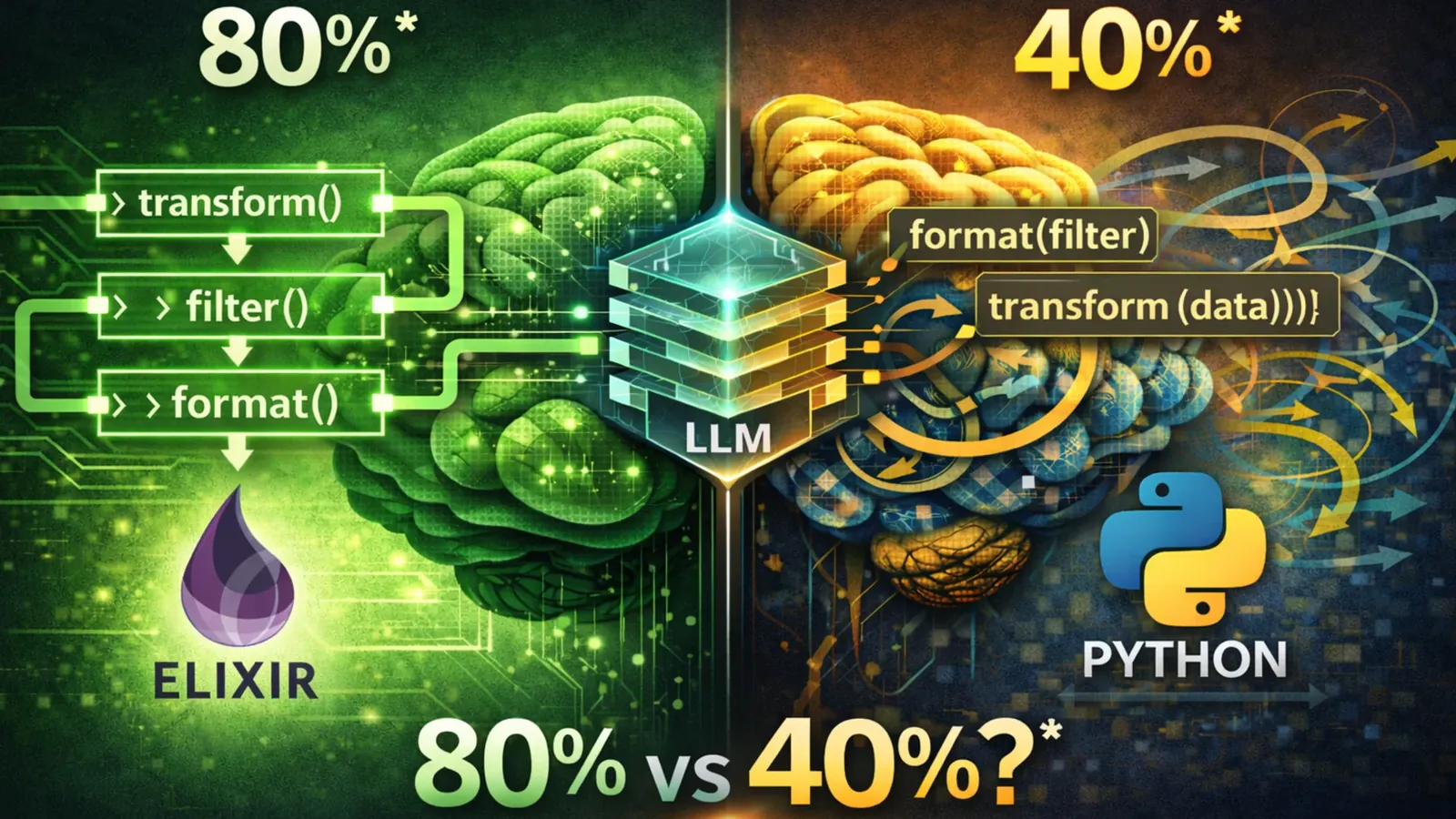
Do LLMs really write better Elixir than Python?
April 2, 2026
A Tencent benchmark ranked Elixir #1 for LLM code generation. As an Elixir developer, I dug into the data: the truth is more nuanced than the headline, but the structural advantages are real.

From chatbot to agent: a step-by-step mental model for understanding agentic AI
January 4, 2026
Moving from conversational mimicry to autonomous execution: understand how agentic AI systems pursue complex goals, use tools, and adapt to changing environments through a continuous reasoning loop.

When your AI turns against you: defending public chatbots from prompt injection
May 20, 2025
Users turned Bild.de's public chatbot against the brand. Here are the prompt-injection defences every team running a public-facing AI should put in place.